
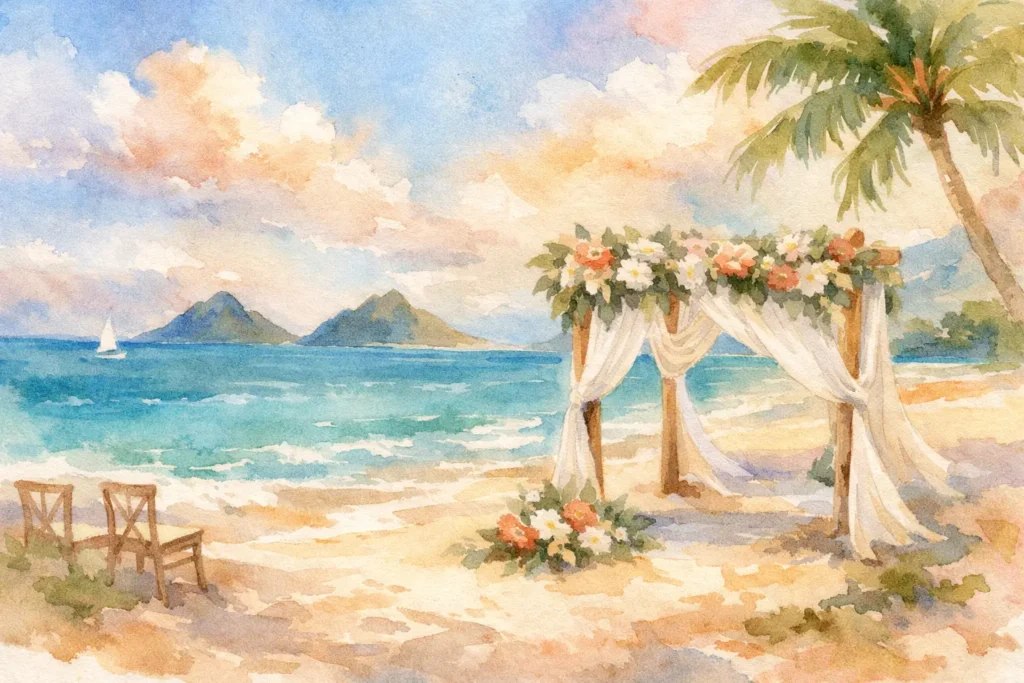
The moment your toes touch warm sand, a wedding feels different. The ocean is your backdrop, the breeze is part of the décor, and the usual formal rules soften a little. Still, beach wedding etiquette matters. A thoughtful approach helps your ceremony feel relaxed and romantic while honoring the island, the public shoreline, and the people sharing the day with you.
For an Oahu wedding or vow renewal, the goal is not perfection. It is presence. A little preparation gives you and your guests room to enjoy the view, hear the words that matter, and celebrate without worrying about sun, sand, or unexpected wind.
Beach Wedding Etiquette Starts With the Setting
A beach is beautiful precisely because it is not a private ballroom. On Oahu, many shorelines are shared public spaces, which means couples should plan with respect for beachgoers, local residents, and the natural environment. Your ceremony should enhance the setting, never overwhelm it.
Keep your ceremony footprint simple. Choose décor that can be set up and removed quickly, and avoid anything that may blow into the ocean or remain in the sand. Loose confetti, balloons, glitter, artificial flower petals, and sky lanterns may look festive in a photo, but they can create litter and harm wildlife. Fresh leis, a small floral arrangement, or a few carefully placed chairs can be just as meaningful and much more appropriate for the location.
Timing also deserves attention. Sunset light is lovely, but beaches can be busy at that hour. A seasoned coordinator can help you select a location and ceremony time that suit your group, your vision, and the natural rhythm of the beach. Build in extra time for traffic, parking, and a short walk across sand. Arriving calm is one of the simplest gifts you can give yourselves.
Keep the Ceremony Considerate and Intimate
A beach ceremony does not need a large production to feel special. In fact, smaller setups often feel more personal and photograph beautifully. Ask guests to keep voices low before the ceremony begins, silence phones, and avoid stepping into the aisle or photographer’s view.
If you are inviting a few loved ones, let them know that the beach may not provide much shade, seating, or privacy. This is not a reason to worry. It simply helps everyone arrive prepared and comfortable. A clear message in your invitation or pre-wedding email sets the tone kindly: come dressed for warm weather, arrive early, and be ready to celebrate in a natural outdoor setting.
What to Wear to a Beach Wedding
Beach attire should feel polished without fighting the weather. Couples often choose lightweight fabrics that move gently in the breeze, such as chiffon, linen, cotton, silk blends, or breathable tropical formalwear. A flowing dress, a linen shirt, or a simple aloha-inspired look can be every bit as elegant as traditional formal attire when it fits the setting.
For guests, the best rule is to follow the couple’s requested dress code while choosing comfort. A beach formal invitation may call for a sundress, dressy jumpsuit, lightweight suit, or button-down with tailored trousers. For a more casual elopement or vow renewal, neat resort wear may be perfect. Very high heels are rarely practical on sand, so wedges, dressy sandals, flats, or barefoot-friendly footwear are wiser choices.
Bring a light layer if the ceremony is near sunset. Oahu evenings can feel cooler once the sun dips behind the mountains, especially near the water. Sunglasses are helpful before the ceremony, but guests should remove them when the vows begin unless they need them for comfort. It is a small gesture that makes the moment feel more attentive and personal.
Couples Should Plan for Wind, Sun, and Sand
The beach gives you a natural kind of beauty, along with a few realities. Veils, loose hairstyles, long trains, and lightweight paper items can all react to the wind. That does not mean you should avoid them. It means choosing a stylist and coordinator who know how to work with the conditions, and being open to a little movement in your photos.
A few practical details go a long way. Consider sunscreen that will not leave a white cast in photographs, blotting papers for humidity, and a small towel for sandy feet. For rings, designate one trusted person to hold them until the ceremony. If you plan to go barefoot, wait to remove your shoes until just before walking to the ceremony area so your feet stay comfortable for as long as possible.
Guest Etiquette for a Beach Ceremony
Guests often ask what they should bring. The answer is simple: bring what helps you be fully present without creating clutter. Water, sunscreen, sunglasses, a light wrap, and comfortable shoes are usually enough. If children are attending, parents may want to bring quiet activities for the time before the ceremony, but the vows themselves should remain calm and distraction-free.
Photography is one area where clear etiquette protects the experience. Your guests will naturally want a photo of the ocean, the leis, and your first kiss. Invite them to take a few candid pictures before or after the ceremony, then ask them to put phones away during the vows. A professional photographer can capture the moment far better than a row of raised screens, and your guests will remember how the ceremony felt rather than how it looked through a phone.
It is also thoughtful for guests to avoid wearing white, ivory, or anything that could compete with the couple unless the couple specifically requests an all-white look. Hawaiians often wear white for weddings, so this is not an absolute rule. It depends on the couple’s style and the invitation. When in doubt, guests can choose cheerful, soft colors that complement the beach without becoming overly formal.
Respect Hawaii Beyond the Ceremony
A Hawaii wedding is a celebration in a place with deep history, living culture, and extraordinary natural beauty. Respect begins with simple choices: stay on designated paths when possible, do not disturb wildlife, and leave the beach cleaner than you found it. Guests should never remove coral, shells, rocks, or sand as souvenirs.
Cultural touches should be chosen with care, not treated as props. A lei exchange can be a heartfelt symbol of love and welcome. Hawaiian music can bring warmth and emotion to a ceremony. If you include Hawaiian language, traditions, or music, work with knowledgeable local professionals who can guide you respectfully and explain the meaning behind what you are choosing.
This same thoughtfulness applies to alcohol and celebrations after the ceremony. Public beach rules vary by location, and a beach is not the place for a loud, sprawling party. Save the reception celebration for an appropriate restaurant, private venue, or planned gathering where everyone can relax without affecting others enjoying the shoreline.
Make the Day Feel Easy, Not Overmanaged
The best beach wedding etiquette is really about making room for the moment. Do not ask guests to carry too much, wear something uncomfortable, or guess where they need to be. Do not burden yourselves with managing music, flowers, timing, transportation, and paperwork while trying to exchange vows.
This is where personal planning support can make a real difference. Hawaiian Eye Weddings helps couples shape intimate Oahu ceremonies around their own story while taking care of the details that can otherwise become stressful. Whether you are planning an elopement for two or a vow renewal with your closest family and friends, experienced guidance lets the beach remain the beautiful, peaceful part of the day it is meant to be.
Let the breeze move your hair, let a little sand find its way into the photos, and let the ocean remind you why you chose this place. When everyone arrives prepared and treats the setting with care, your ceremony can feel wonderfully simple and entirely unforgettable.