
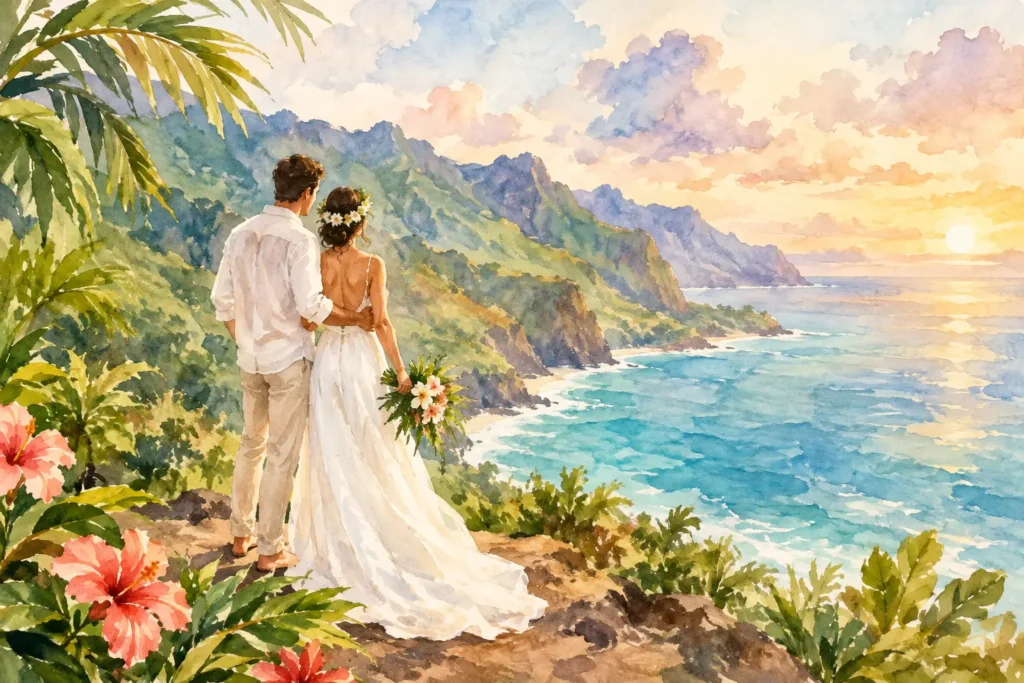
A quiet stretch of Oahu sand at sunrise. The ocean moving behind you. Your partner’s hand in yours. No seating chart, no receiving line, no pressure to make a hundred people happy. If you are asking, can you elope without guests, the answer is yes – and for many couples, it is exactly the kind of wedding that feels most honest.
A guest-free elopement is not a lesser version of a wedding. It can be a beautifully intentional ceremony centered completely on your commitment, your story, and the place where you choose to begin your marriage. Hawaii offers the romance of a destination celebration without requiring you to turn it into a large, complicated event.
Can You Elope Without Guests in Hawaii?
Absolutely. You can hold an Oahu elopement with just the two of you, your licensed officiant, and the professional support needed to make the ceremony happen. A photographer or videographer may be present if you would like to preserve the day, but they do not have to feel like guests. They are there to quietly document the moments you may be too busy feeling to notice.
For a legal marriage in Hawaii, you will need to meet the state’s marriage-license requirements and be married by an authorized officiant. You do not need a bridal party, relatives, friends, or a crowd on the beach. Hawaii also does not require witnesses to sign a marriage license, which makes it especially well suited to couples planning an intimate ceremony for two.
There is one gentle distinction worth understanding: private does not always mean completely alone. A legal ceremony requires an officiant, and popular public beaches can have other visitors nearby. With thoughtful timing, the right location, and an experienced coordinator, however, your ceremony can still feel wonderfully peaceful and personal.
Why Couples Choose a No-Guest Elopement
Some couples elope without guests because a larger wedding simply does not fit their personalities. Others are working with a budget, navigating complicated family dynamics, combining a wedding with a long-awaited vacation, or planning after a short engagement. There is no wrong reason to choose a smaller path.
Often, the biggest gift is freedom. You can exchange vows at sunrise rather than scheduling around a ballroom. You can wear what makes you feel like yourselves. You can spend your wedding morning having coffee together instead of managing last-minute questions from vendors and relatives.
A guest-free ceremony also leaves room for emotion. Without an audience, many couples feel more comfortable speaking personal vows, pausing when tears come, laughing when they need to, and being fully present with one another. The ceremony becomes less of a performance and more of a promise.
That said, eloping without guests can bring up feelings you may not expect. You might miss having your parents there, wish a best friend could celebrate in person, or feel a little nervous about how loved ones will react. Those feelings do not mean an elopement is the wrong choice. They simply deserve an honest conversation before you book your flights.
Planning an Elopement Without Guests, Step by Step
The beauty of a simple wedding is that there are fewer moving parts, not no details at all. A little planning allows the day to feel effortless when it arrives.
Choose the feeling before choosing the location
Begin with the experience you want. Do you picture an early-morning beach ceremony with soft light and cooler temperatures? Would you prefer a golden-hour celebration as the sky begins to change color? Do you want dramatic ocean views, a quiet cove, or a lush setting away from the sand?
Oahu has remarkable variety, but each location has practical considerations. Beach access, parking, seasonal weather, time of day, permits, and the likelihood of other beachgoers all affect the experience. A local planner can help you select a setting that matches the vision in your head while respecting the realities of the island.
Handle the Hawaii marriage license early
Most couples can begin the Hawaii marriage-license process before they travel, then complete the required steps in person after arriving. There is no residency requirement, no waiting period once your license is issued, and the license is generally valid for a limited period, so timing matters.
Requirements can change, and every couple’s circumstances are different. If either of you has been married before, is traveling internationally, or has questions about identification, confirm the current state requirements well before your trip. A wedding coordinator can guide you through the process, but official marriage-license rules always have the final word.
Decide what you want included
No guests does not mean no celebration. You can keep things beautifully simple with an officiant, a meaningful ceremony, and a few photographs. Or you can add the details that make the day feel like yours: fresh flower leis, a bouquet, Hawaiian music, professional video, transportation, hair and makeup, or a small dinner for two afterward.
Think about which parts will matter when you look back years from now. Some couples value a keepsake certificate and a private vow exchange. Others want a full gallery of images to share with family at home. There is room for both simplicity and care.
Give loved ones a place in the day from afar
Choosing not to invite guests does not mean excluding the people you love. You might tell family after the ceremony with a favorite photo, arrange a video call later that day, or host a casual celebration at home after your return. If you want to include someone during the ceremony, you could read a letter from a parent, wear a meaningful piece of jewelry, or carry a small memento.
For couples worried about hurt feelings, it helps to be clear and kind: this was a decision to protect the intimacy of your wedding day, not a measure of anyone’s importance. You do not need to defend the choice endlessly. The people who love you will usually understand that you chose what felt right for your marriage.
Making a Two-Person Ceremony Feel Meaningful
The absence of guests makes the details more visible. Your words, the setting, and the pauses between them carry more weight. This is why a personalized ceremony matters so much.
Share your story with your officiant. Mention the places you have been together, the qualities you admire in each other, or the promise you most want to make. You may choose traditional vows, write your own, or blend both. There is no need to make the moment sound polished. The most moving vows are usually the ones that sound like the two people saying them.
Build in time after the ceremony, too. Do not rush from the beach directly to the next item on an itinerary. Take a walk, open a bottle of something special, enjoy a quiet meal, or simply sit together and watch the water. The unplanned minutes often become the memories couples treasure most.
When an Elopement for Two May Not Be the Best Fit
A guest-free elopement is wonderful, but it is not automatically the best answer for every couple. If having your children present feels essential, if your parents’ presence would make the day more meaningful, or if you know you would regret not sharing the moment with close friends, consider a tiny ceremony instead. Even two to 10 guests can preserve the easy, intimate feeling while including your inner circle.
You can also choose a middle path: elope in Hawaii now, then celebrate with family later. This option gives you the calm destination ceremony you want without asking loved ones to travel or leaving them out of your wider celebration.
The right size is the one that lets you feel joy, not obligation.
A Hawaii Wedding That Belongs Only to You
At Hawaiian Eye Weddings, we have seen how powerful a simple ceremony can be when every detail reflects the couple standing together. From marriage-license guidance and an experienced officiant to photography, florals, music, and thoughtful coordination, the goal is not to make your elopement bigger than it needs to be. It is to make it feel completely yours.
If your dream wedding is two people, an ocean view, and a promise made without distractions, you do not need permission to keep it small. You only need a plan that lets you arrive, breathe deeply, and say yes to each other.