
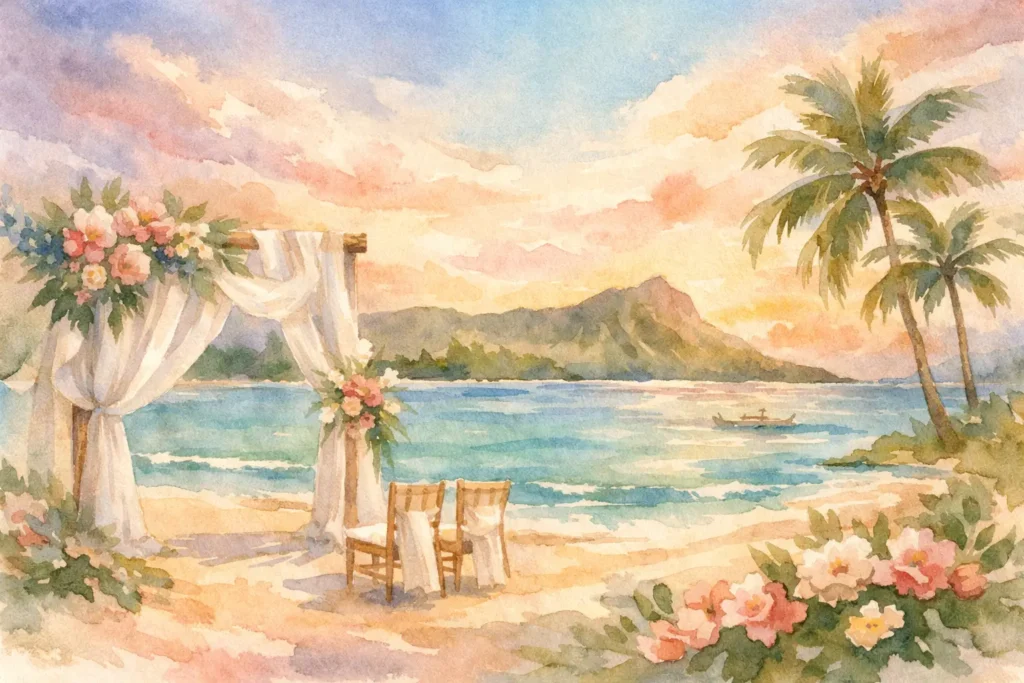
You can picture the moment clearly – warm sand under your feet, the ocean just beyond your guests, and the kind of light that makes everything feel softer and more meaningful. What most couples cannot picture at first is everything happening behind that moment. A good destination wedding planning guide helps turn that beautiful vision into a day that feels calm, personal, and fully cared for.
For couples choosing Oahu, that matters even more. Planning from a distance can feel romantic one minute and overwhelming the next. Flights, timing, permits, marriage license details, weather questions, guest travel, ceremony choices – it is a lot to hold on your own. The right approach is not to make your wedding more complicated. It is to make smart decisions early so the experience stays joyful.
What a destination wedding planning guide should actually help you decide
Most advice about destination weddings starts too broadly. Couples do not just need inspiration. They need clarity. Before you think about flowers or music, you need to answer three questions: what kind of experience you want, who you want there, and how much planning you truly want to manage yourself.
That is where many couples find relief. You do not have to build a wedding from scratch to have a deeply personal ceremony. In fact, intimate destination weddings often feel more meaningful because they strip away pressure and bring the focus back to the two of you. A beach ceremony in Oahu can be simple without feeling plain, and beautiful without becoming expensive.
The first real decision is scale. An elopement for two feels very different from a ceremony with a small circle of family and friends. Neither is better. It depends on whether privacy, ease, and flexibility matter more to you than having loved ones present in person. If you are inviting guests, your planning needs shift toward timing, accessibility, transportation, and communication. If you are keeping it just the two of you, you can usually move faster and keep the experience more relaxed.
Start with the location, then plan around it
Oahu offers something many couples want but struggle to find elsewhere: natural beauty that already feels complete. You do not need to create a backdrop. The island gives you one. That changes how you should plan.
Instead of starting with decor, start with setting. Think about whether you are drawn to a quiet beach, a lookout with sweeping views, or a spot that feels tucked away and intimate. Your location influences almost everything else – ceremony time, guest comfort, photography style, transportation, footwear, and even what you wear.
A sunrise beach ceremony can be peaceful, private, and cooler for everyone involved. The trade-off is an early start, especially if hair and makeup are part of the plan. A sunset ceremony brings a softer golden atmosphere and may be easier for guests, but popular times can feel busier and schedules can be tighter. Midday is often the least forgiving for light and heat, though sometimes it works best for travel timelines. This is one of those places where local guidance matters because the prettiest time on paper is not always the smoothest in real life.
Why couples should simplify the planning process
Traditional wedding planning often rewards complexity. Destination weddings should do the opposite. When you are planning from the mainland or from another island, every extra vendor, separate contract, and unclear fee adds stress.
That is why many couples are happier with coordinated ceremony packages instead of trying to piece everything together on their own. One point of contact can make a huge difference. When your officiant, photography, music, timing, ceremony details, and day-of coordination are organized together, you spend less time chasing logistics and more time making thoughtful choices.
This does not mean giving up personalization. It means placing the moving parts in experienced hands so your ceremony can still reflect your relationship. The most memorable destination weddings are not always the biggest ones. They are the ones where the couple feels present, relaxed, and emotionally connected because the planning did not drain them beforehand.
The budget question couples worry about most
A destination wedding in Hawaii can be more accessible than many couples expect, but only if pricing is clear from the beginning. The biggest budget mistake is not spending too much on one beautiful thing. It is underestimating the smaller planning costs that build up around it.
Travel and lodging are obvious line items, but couples should also ask about transportation, permit-related needs, ceremony enhancements, attire adjustments for beach conditions, hair and makeup timing, and what is included in photography or video coverage. If you are comparing options, look carefully at what is actually part of the package and what will be added later.
Transparent pricing makes planning feel lighter. When you know what is included, you can decide whether you want a simple ceremony with just the essentials or a more customized celebration with upgraded florals, added media coverage, live music, or transportation support. There is no single right number to spend. What matters is choosing a package or service structure that matches your priorities instead of leaving you with surprise costs close to the wedding date.
A destination wedding planning guide for the legal details
The legal side of a Hawaii wedding is often less intimidating than couples fear, but it should never be left until the last minute. You will need to understand the marriage license process, appointment timing, and what is required before the ceremony can take place legally.
If that sounds unromantic, think of it this way: the faster you get clear on the legal steps, the easier it becomes to enjoy the emotional side of planning. Destination weddings work best when practical details are handled early. That includes knowing whether you are planning a legal marriage or a vow renewal. Vow renewals offer more flexibility because there is no marriage-license process involved, which is one reason many couples love them for anniversary trips or second celebrations.
This is also where hands-on planning support becomes especially valuable. Having someone walk you through the order of events, required timing, and local expectations can save you from avoidable stress.
Make the ceremony feel like you
One of the sweetest parts of an intimate destination wedding is that the ceremony does not have to follow anyone else’s script. You can keep it short and simple, or make room for personal vows, a lei exchange, live music, a reading, or a keepsake that helps the day live on after you return home.
Small touches often carry the most meaning. A favorite song played softly as you walk together on the sand. A flower choice with family significance. A ceremony wording that reflects a second marriage, a long-awaited elopement, or a vow renewal after years of life together. These are the details that make a destination ceremony feel personal rather than packaged.
At the same time, it helps to stay realistic. Not every beach setup works for extensive decor, seating, or a long formal timeline. Oahu ceremonies often shine brightest when they are intentional, beautiful, and lightly styled rather than overloaded. Let the location do part of the work.
Guest experience matters, even at a small wedding
If loved ones are joining you, think through the day from their side too. Destination weddings ask more of guests than local celebrations do, so a little care goes a long way. Timing, directions, parking, walking distance, shade, and transportation all affect how relaxed everyone feels.
This does not mean planning a full production. It simply means choosing a ceremony structure that respects the realities of travel. Older family members may need easier access. Young children may do better with a shorter ceremony window. Guests arriving from different parts of Oahu may appreciate straightforward instructions instead of a vague beach meetup.
When the logistics are clear, everyone can settle into the moment with you.
What support should feel like
The best planning support is not pushy or generic. It feels personal, responsive, and steady. Couples need someone who answers questions quickly, explains options clearly, and helps them make decisions without pressure. That matters even more when the ceremony is far from home.
A planner or coordinator should help you feel taken care of, not sold to. That means honest guidance about what fits your budget, what works well at your chosen location, and where it makes sense to keep things simple. For many couples, that is exactly why working with a company like Hawaiian Eye Weddings feels different. There is comfort in knowing someone experienced is paying attention to both the emotional heart of the day and the practical details that protect it.
If you are choosing Oahu for your wedding or vow renewal, you do not need a more complicated plan. You need one that fits your relationship, your budget, and the kind of memory you want to carry home. The most beautiful destination weddings are often the ones that feel easy once you arrive – because someone took care to make them that way.
When you start planning, let your first question be simple: what would help us feel peaceful and present on this day? Follow that answer, and the rest tends to fall into place.