
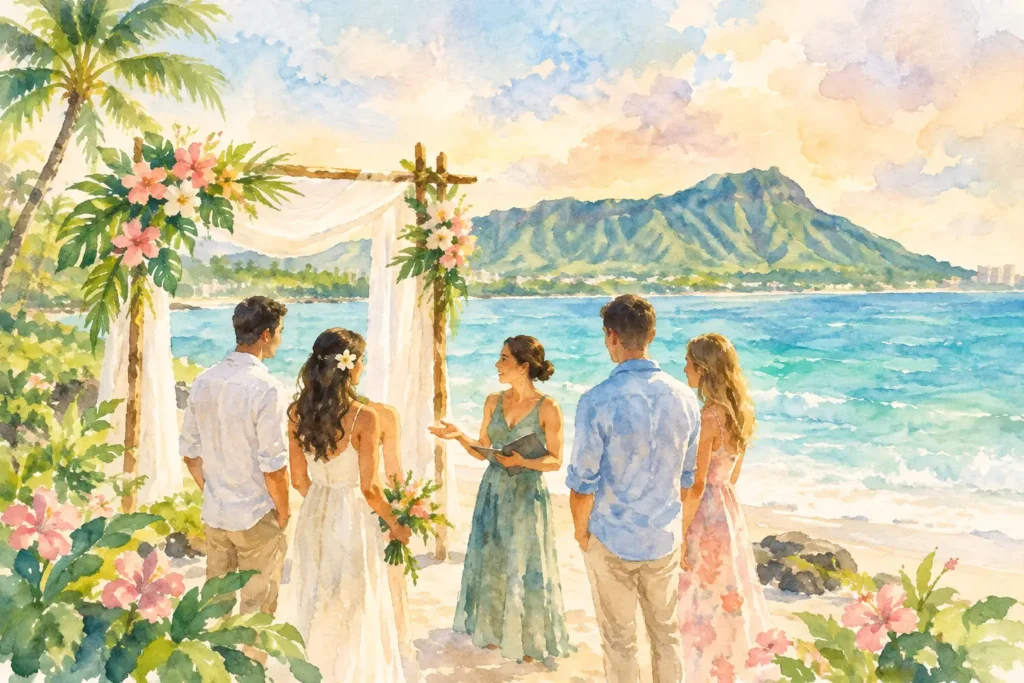
The moment your music begins and you see the Pacific beyond your ceremony space, you should be thinking about your partner, not wondering where to stand. Thoughtful ceremony rehearsal planning creates that calm. For an intimate Oahu wedding or vow renewal, a rehearsal does not need to feel formal or take hours. It simply gives everyone a clear, comfortable picture of what will happen when the meaningful moment arrives.
A beach ceremony has its own rhythm. There may be sand underfoot, ocean breezes, a changing tide, curious beachgoers in the distance, and a sunset that waits for no one. A little preparation lets you welcome those beautiful realities rather than feel rushed by them.
Why a Ceremony Rehearsal Matters
A rehearsal is not about making your ceremony stiff or overly choreographed. It is about removing the small uncertainties that can pull attention away from the words, the people, and the promise you are making.
For couples traveling to Hawaii, the planning process often happens from far away. Parents, children, close friends, or a wedding party may be arriving on different flights and meeting for the first time just before the celebration. Even a short walk-through helps everyone settle in. They will know where to gather, when to begin walking, and what to do after the kiss.
It also gives you a chance to experience the flow of your ceremony as a couple. You can decide whether you want to walk in together, whether a parent will escort one partner, where your children will stand, and how close loved ones should be during a small circle ceremony. These choices are simple, but they shape how personal the moment feels.
For a vow renewal with just the two of you, the rehearsal can be even lighter. A few minutes with your coordinator or officiant may be all you need to review your entrance, exchange of leis or rings, and the best place to stand for photographs.
Ceremony Rehearsal Planning Starts With the Real Schedule
The best rehearsal follows the actual shape of your wedding day. Before deciding when to gather, consider the ceremony location, travel time, parking, the time of sunset, and when hair, makeup, photography, and floral delivery are scheduled. On Oahu, timing matters especially for beach locations, where light and conditions can change quickly.
If you have a larger group or several people participating, a rehearsal the day before is usually the most relaxed choice. It allows everyone to ask questions without the pressure of being dressed and ready for photos. If your group is small, a same-day walk-through can work beautifully. Meet at the ceremony site a little early, review the order, and then let everyone return to getting ready.
There is no prize for holding a long rehearsal. In fact, twenty to thirty focused minutes is often ideal for an intimate ceremony. The goal is confidence, not exhaustion. Save the celebration for your welcome dinner, a casual beach gathering, or quiet time together before the wedding day.
Who Should Attend?
Anyone with a role in the ceremony should be included. That may mean parents, a maid of honor or best man, children, readers, musicians, and the person holding the rings. If guests are simply arriving, sitting, and enjoying the view, they do not need to attend unless you want them there.
For young children, keep expectations realistic. Let them practice once or twice, show them exactly where to go, and have an adult ready to help if they become shy or distracted. A flower child who decides to hold their petals instead of scattering them still makes a sweet memory. The ceremony does not have to be perfect to be beautiful.
What to Practice at Your Oahu Ceremony Rehearsal
Begin by walking through the ceremony in order. Start where each person will wait, then practice the entrance at a natural pace. On sand, slower steps are safer and look more graceful in photographs. If one partner is wearing a long dress or heels, test the path and choose footwear that feels secure.
Once everyone reaches the ceremony area, confirm where they will stand. Couples are often surprised by how much a small adjustment changes the view for guests and the camera. You want to be close enough to feel connected, angled naturally toward each other, and positioned so the officiant can be heard without blocking the photographs.
Review the key transitions: who presents the rings, when a reading happens, how a musician will begin or end a song, and when the lei exchange takes place. If you are including a unity ritual, sand ceremony, or family blessing, rehearse the movement around it. This prevents a lovely addition from becoming a moment of quiet confusion.
Finally, practice the recessional. After the kiss, pause for a breath. Let your guests cheer if that feels right, then walk together toward the photographer’s direction. That small pause makes room for the joy of the moment and gives your photographer the chance to capture it.
Let Your Officiant Lead the Flow
Your officiant is more than the person who speaks the ceremony. They help set the pace and guide you through the moments when emotions are high. During the rehearsal, ask how they will cue you for vows, rings, lei exchanges, or a reading. Knowing that you will be gently guided means you do not have to memorize every detail.
If you are writing personal vows, you do not need to read them aloud at the rehearsal. Simply decide how you will hold them. Printed pages, a small vow book, or your phone can all work, but choose something that is easy to manage in the breeze. Your officiant can also advise on where to place your vows until it is time to speak.
Plan for Hawaii’s Beautiful Variables
An outdoor ceremony asks for flexibility. The ocean may be louder than expected, the breeze may lift a veil, or the sand may be softer in one area than another. A good rehearsal helps you create simple alternatives before the ceremony begins.
Talk through where guests should gather if a brief shower passes through. Decide whether chairs need to be adjusted for sun or wind. If someone has mobility concerns, identify the easiest route from the drop-off point to the ceremony location. These are caring details, especially when you have loved ones who have traveled a long way to be with you.
It also helps to give guests a few practical reminders ahead of time. Encourage them to arrive early, wear comfortable shoes for sand, and bring a light layer if your ceremony is near sunset. They will be more present when they are not worried about navigating the beach in formal shoes.
Keep the Rehearsal Personal, Not Performative
Your ceremony should feel like you, whether it includes two witnesses or twenty-five beloved people. Some couples want a traditional processional. Others prefer to walk in hand in hand, with the ocean as their only backdrop. Neither choice needs defending.
A rehearsal is the right time to make space for the details that carry emotional weight. Perhaps you want a private first look before guests arrive. Perhaps a parent will offer a blessing, or you want to honor children with a lei. Say those wishes out loud to your planning team so they can be thoughtfully placed into the flow of the day.
At Hawaiian Eye Weddings, we believe the planning should feel personal from the first conversation through the final photograph. Clear guidance, a calm timeline, and an honest understanding of what matters most to you can turn a simple beach ceremony into a memory that feels entirely your own.
A Calm Final Check Before the Big Moment
The night before, confirm the meeting time and location with everyone participating. Put rings, vows, identification, and any special items in one designated bag. Then stop planning. You have already done the work that allows the day to feel easy.
On the day itself, arrive with enough time to breathe. Look at the water, hold your partner’s hand, and let your coordinator and officiant handle the flow. The rehearsal has done its job when you no longer notice the logistics at all. What remains is the sound of the waves, the people you love, and the beautiful certainty of choosing each other.