
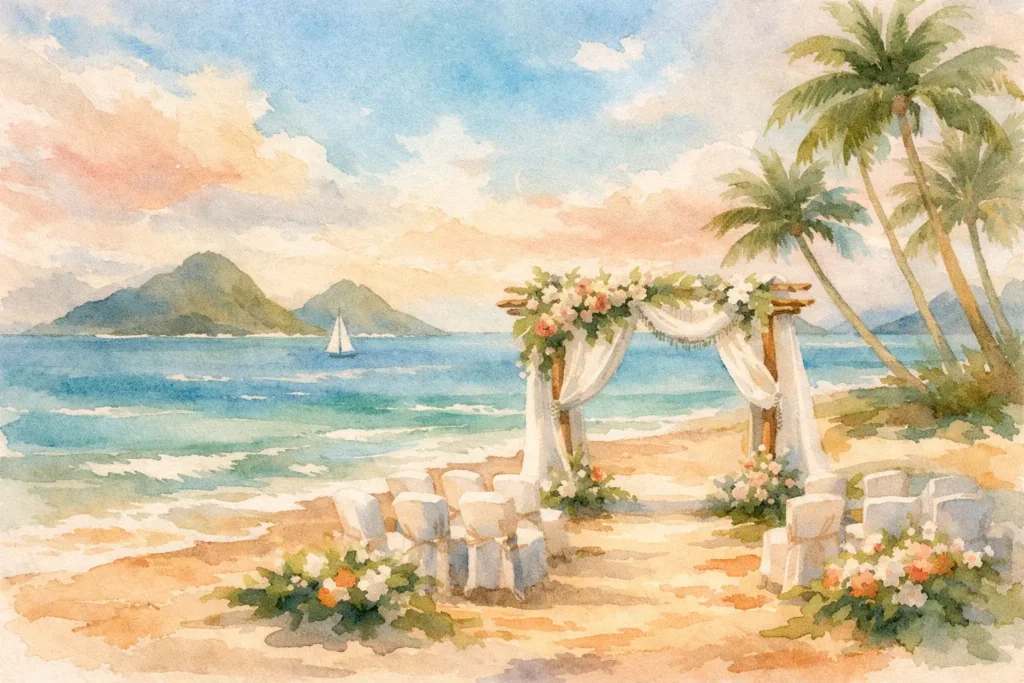
A sunrise ceremony with bare feet in the sand can feel wonderfully simple. But when couples ask, “do beach weddings need permits,” the honest answer is: often, yes – and the details depend on the beach, the number of guests, and the services involved. A little advance planning protects the peaceful, beautiful experience you came to Oahu for.
Do Beach Weddings Need Permits in Oahu?
Many Oahu beach weddings involve permits or approvals, particularly when a professional company is coordinating the ceremony or providing services such as an officiant, photography, chairs, arches, musicians, florals, or transportation. Hawaii’s beaches are precious shared spaces, and rules help preserve access, protect the shoreline, and keep events from interfering with residents and other beachgoers.
The exact requirements can change based on who manages the location. Some sites are under state jurisdiction, while others may be managed by the City and County of Honolulu or another agency. A beach that looks open and easy to access is not automatically an unrestricted event venue. That is why choosing a planner who knows Oahu’s ceremony locations is so reassuring.
Permits are usually not something a couple should have to chase down between booking flights, choosing vows, and telling loved ones the happy news. For a professionally planned beach ceremony, the coordination team should confirm the appropriate process for the chosen location and date. At Hawaiian Eye Weddings, we guide couples through the practical details so the focus stays where it belongs: on the moment you say “I do.”
A Marriage License Is Different From a Beach Permit
This is one of the most common points of confusion. Your Hawaii marriage license gives you legal permission to marry. It does not automatically give you permission to hold a ceremony in a particular beach, park, or scenic area.
Think of them as two separate parts of your wedding day. The marriage license concerns your legal union. The location permit or site authorization concerns how your ceremony uses a public space. Couples planning a vow renewal do not need a new marriage license, of course, but the location may still have rules or permit requirements for the event itself.
For destination couples, this distinction matters. You may have completed the marriage-license process correctly and still need your ceremony team to make sure your beach setup follows local guidelines. Clear communication early in the process prevents disappointing last-minute changes.
What Can Affect Whether You Need a Permit?
No two beach ceremonies look exactly alike, which is why a simple yes-or-no answer does not always tell the full story. A quiet elopement with two people, an officiant, and a photographer may be treated very differently from a larger ceremony with rows of chairs, décor, live music, and a group of guests.
Several practical factors commonly matter:
- The specific beach or park: Management rules vary by location. A favorite photo spot may have different event restrictions than a nearby shoreline.
- Your guest count: Intimate ceremonies are often easier to accommodate than larger gatherings, especially on busy public beaches.
- Your ceremony setup: Chairs, arches, tables, signs, tents, amplified sound, and other equipment may trigger additional rules or simply be prohibited at certain sites.
- Your vendors and services: Commercial photography, videography, officiant services, and coordinated ceremony packages can have their own authorization requirements.
- The time and date: Sunrise may offer a quieter atmosphere, while weekends, holidays, and seasonal high-traffic periods can create more limitations.
This is also why a beach wedding is not the same as reserving a private venue. Public beaches remain public. Even with the right arrangements in place, couples should expect to share the shoreline respectfully with locals, visitors, walkers, swimmers, and the occasional curious child who wants a closer look at the flowers.
The Beauty of Keeping Your Ceremony Intimate
For many couples, permitting considerations are not a reason to give up on a beach wedding. They are simply a reason to plan thoughtfully. In fact, the rules often align beautifully with what couples already want from an Oahu ceremony: a meaningful gathering, a natural setting, and less production around a very personal promise.
An intimate format makes it easier to select a fitting location and keep the ceremony graceful. It also gives you more room to hear the waves, hold hands, and let the experience feel like your own rather than a crowded event schedule.
That does not mean your wedding has to feel small. A flower lei exchange, heartfelt personalized vows, Hawaiian music, professional photos, and a sunset walk along the shore can create a day filled with romance. The scale may be simple, but the feeling can be unforgettable.
What Beach Wedding Permits Do Not Guarantee
A permit or approved location arrangement is valuable, but it does not turn a public beach into a private one. It cannot reserve the entire shoreline, control ocean conditions, silence nearby activity, or guarantee that another visitor will not appear in the background of a photograph.
This is part of the real charm of a Hawaii beach wedding. The ocean is alive. Wind moves through the palms, trade showers can pass quickly, and the light changes by the minute. An experienced team plans with those realities in mind, choosing timing carefully and having a thoughtful backup approach if weather or beach conditions call for a change.
Flexibility is especially helpful for couples who have their hearts set on a specific view. Your planner may recommend a nearby alternative that has a similar feel but better conditions, fewer people, or a more suitable process for your group. The goal is never to make your day feel less personal. It is to protect the calm, joy, and beauty you imagined.
Questions to Ask Before You Choose a Beach Location
Before committing to a ceremony spot, ask your wedding planner whether permits or site approvals are needed for your preferred beach and whether those arrangements are included in the planning process. Ask about guest limits, allowed décor, chair options, music, parking, and the best time of day for privacy and light.
It is also wise to ask what happens if conditions change. A good answer should be specific and comforting. Will there be a location alternative? Can the timeline shift for a passing shower? What does the team recommend if the surf is high or the beach is unusually crowded?
These questions are not about taking romance out of the planning. They are how you make space for romance on the day itself. When logistics have been handled with care, you are free to look at each other, breathe in the salt air, and be fully present.
A Simple Path to a Beautiful Oahu Ceremony
The easiest beach wedding plans begin with a realistic vision. Share the feeling you want – quiet sunrise, warm golden sunset, a private elopement, or a small circle of family – along with your date, approximate guest count, and any must-have details. From there, a knowledgeable coordinator can suggest locations that suit both your dream and the local requirements.
Avoid buying décor or inviting a large group before confirming that the intended location can accommodate your plans. Beach rules may shape the setup, but they do not have to diminish the experience. Often, the most moving ceremonies are the ones with fewer distractions and more intention.
Your wedding day should not be spent wondering whether you are in the right place or whether an overlooked rule could interrupt the ceremony. With the proper planning behind you, a beach becomes what it should be: a breathtaking place to begin a marriage or celebrate the love that has carried you this far.