
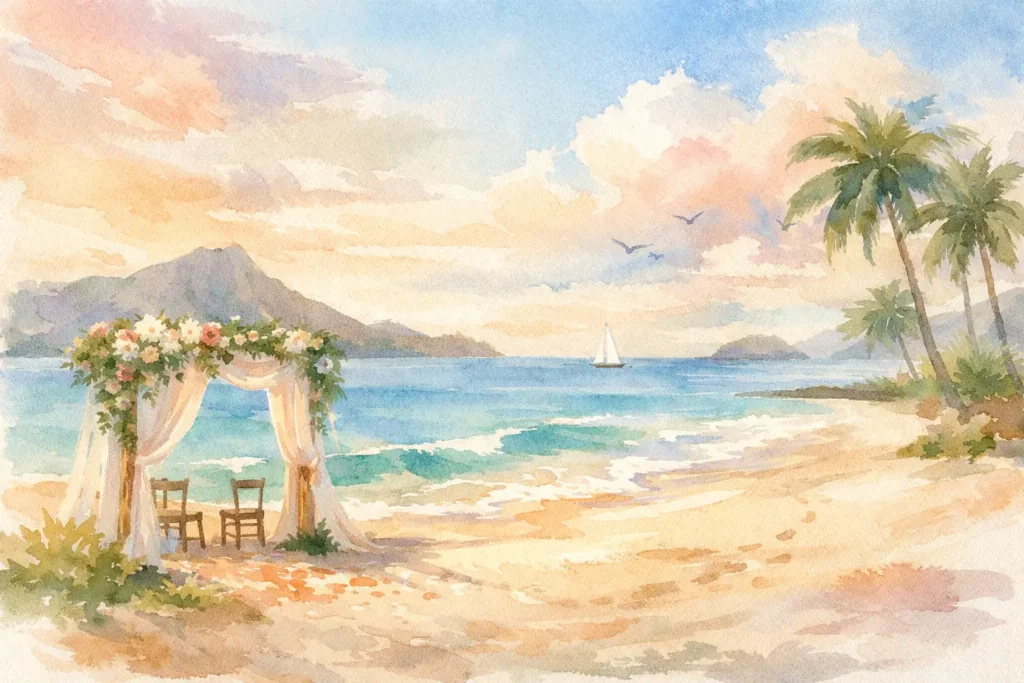
The best beach ceremonies feel wonderfully unhurried: toes in the sand, warm trade winds, the Pacific stretching beyond your vows. That feeling does not happen by accident. Preparing a beach ceremony timeline gives your Oahu wedding or vow renewal enough structure to feel effortless, while leaving room for the romance that brought you to Hawaii in the first place.
For intimate celebrations, the goal is not to fill every minute. It is to protect the moments that matter – arriving calm, sharing a meaningful ceremony, and having time afterward to hold hands, laugh, and take photographs as the light turns golden.
Preparing Your Beach Ceremony Timeline Starts Early
A destination ceremony is often simpler than a traditional wedding, but it still benefits from a clear plan. Start by choosing the experience you want before choosing every small detail. Do you picture just the two of you at sunrise? A sunset vow renewal with your children? A small wedding with leis, Hawaiian music, and a photographer capturing candid moments?
About six to 12 months before your date is a comfortable window to select your ceremony package and reserve key vendors, especially if you have a particular date, time of day, or location in mind. Oahu is welcoming year-round, yet popular travel seasons and holidays can make preferred times more limited. Couples planning on a shorter timeline can still create something beautiful. The important thing is to reach out as soon as your travel dates are firm so the right pieces can be organized thoughtfully.
At this stage, talk through your guest count, your ideal setting, and whether you would like photography, video, music, florals, transportation, or a special ceremony element. A small ceremony does not have to look or feel small. A fresh flower lei exchange, a favorite song played as you arrive, or personal vows can make a simple shoreline gathering feel deeply your own.
Three to Four Months Before: Set the Foundations
Once your date is held, the next part of preparing your beach ceremony timeline is confirming the practical details that let you relax later. Book flights and accommodations, and make sure everyone who matters knows the ceremony date and general timing. For a small group, it is kind to let guests know that beach conditions require flexibility with footwear, seating, and arrival plans.
This is also the time to decide what you will wear. Light, breathable fabrics photograph beautifully and feel more comfortable in Hawaii’s warmth. A flowing dress, linen shirt, barefoot sandals, or a simple button-down can all suit the setting. If you love a longer veil or dramatic train, it can be stunning by the ocean, but remember that wind is part of the scene. A thoughtful plan for hair, accessories, and fabric movement helps you enjoy the breeze rather than battle it.
Couples marrying in Hawaii should also begin reviewing marriage-license requirements well ahead of travel. A vow renewal does not require a marriage license, but it can be just as personal and meaningful as a wedding. Your planner can help you understand the process and timing, so there are no last-minute surprises after you land.
Six to Eight Weeks Before: Make It Personal
This is the sweet spot for turning a ceremony plan into your ceremony. Choose whether you would like traditional wording, a spiritual tone, a lighthearted touch, or vows written in your own voices. If you are renewing your vows, think about the years that led you here. What have you built together? What promise feels especially meaningful now?
Send your final guest count and share any mobility considerations. A beach can be accessible for many guests, but the walk from parking to the sand, uneven ground, and heat should be considered with care. For elderly relatives, young children, or anyone who needs extra support, an earlier ceremony time, transportation assistance, or a location with an easier approach may be the better choice.
Finalize your floral choices and music, too. Leis are a beautiful way to honor each other, and they create a lovely ceremonial pause before the vows begin. Music can be as simple as a recorded favorite or as memorable as live Hawaiian melodies. It depends on the atmosphere you want and how you hope the ceremony will feel when you watch it back years from now.
Two Weeks Before: Confirm the Day-of Details
By now, your beach ceremony timeline should be simple enough to read at a glance. Confirm the meeting location, arrival time, transportation plan, attire, and contact information for everyone directly involved. If you have guests, send a short final note with directions, a reminder to arrive early, and practical advice such as bringing water and wearing shoes that can handle sand.
Do not overpack the ceremony day. Bring your rings, identification and required documents for a legal marriage, vows, and any meaningful keepsake you plan to include. Leave valuables and complicated extras behind when possible. The beach is naturally beautiful, and the best photographs tend to come from being present rather than managing too many belongings.
Weather deserves a calm, realistic conversation. Hawaii showers often pass quickly, and a little cloud cover can create soft, flattering light. Still, the ocean is always in charge. Wind, rain, surf conditions, or beach activity can require an adjustment to timing or location. A skilled local coordinator watches conditions closely and has a thoughtful backup approach, so flexibility never has to mean disappointment.
Your Beach Ceremony Timeline for the Day
For a sunset ceremony, plan to arrive earlier than you think you need to. You want a few quiet minutes to settle in before anyone begins taking photos or gathering guests. Sunset changes quickly, and photographers need enough daylight for couple portraits before and after the ceremony.
A typical intimate beach ceremony can unfold over about 60 to 90 minutes. Plan to arrive 30 minutes before the official start time. This gives you time to meet your officiant, straighten a lei, take a breath, and allow guests to get situated. If hair and makeup are part of your day, build in a generous buffer. Being ready early feels much better than watching the clock in paradise.
The ceremony itself often lasts 15 to 25 minutes, depending on personal vows, readings, music, and cultural touches. Afterward, allow at least 30 minutes for family photos, couple portraits, and the joyful hugs that follow. If you are adding video, live music, or a larger guest group, a little extra time is wise.
For sunrise, the rhythm is different. The beach may be quieter and cooler, but getting ready begins before dawn. Sunrise is beautiful for couples who want privacy and soft morning light, yet it is not the best fit for every group. Consider the comfort of your guests and whether you would rather celebrate afterward with breakfast or linger through a glowing sunset.
Build in Space for the Unexpected
The most useful part of any wedding timeline is the space between the planned moments. A guest may run late. A child may need a snack. The wind may ask you to pin your hair differently. None of these things have to take away from your ceremony when the schedule has breathing room.
Try not to schedule a tight dinner reservation immediately after your vows. Give yourselves time to enjoy the beach, finish photographs, and let the emotion of the moment settle in. A relaxed dinner afterward feels far more romantic than rushing from the sand to the car.
At Hawaiian Eye Weddings, we believe the details should support your love story, not distract from it. With caring guidance, clear timing, and a plan that honors both Hawaii’s beauty and real-life logistics, your ceremony can feel personal from the first step onto the sand to the final photograph.
The ocean will bring its own music, the light will be exactly what it is, and your only job will be to look at the person you love and be there for the promise you came to make.