
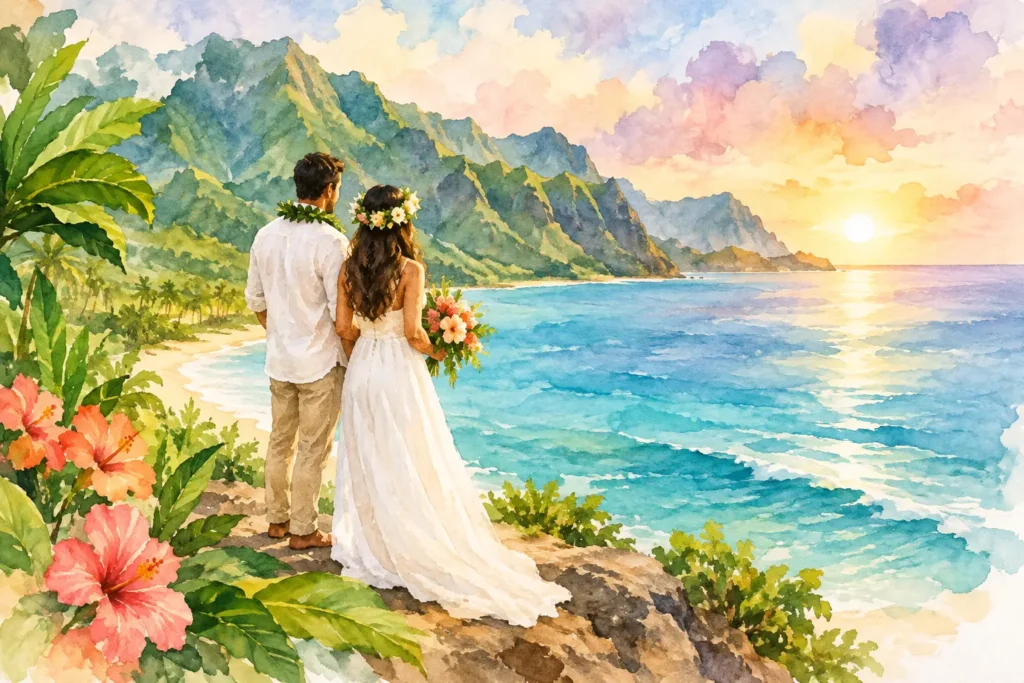
A sunrise ceremony on an Oahu beach can feel beautifully simple: the two of you, the ocean, and the promises that matter most. The paperwork should feel simple, too. Understanding elopement legal requirements before you travel gives you room to be present on your wedding day instead of worrying whether one missed detail could affect your marriage license.
For most couples, getting legally married in Hawaii is refreshingly straightforward. There is no residency requirement, no blood test, and no waiting period after your license is issued. Still, timing matters. A little preparation lets you arrive ready to enjoy paradise and say yes with confidence.
The legal essentials for a Hawaii elopement
To marry legally in Hawaii, both people must be at least 18 years old, free to marry under the law, and present together to complete the marriage-license process. You do not need to live in Hawaii, so couples from the mainland, other countries, and other parts of the islands may apply.
You will need a Hawaii marriage license, a ceremony performed by a Hawaii-licensed officiant, and a properly completed license filed after the ceremony. Those are the central pieces. A breathtaking location, photography, leis, music, and the people you choose to include make the day personal, but they do not replace the legal steps.
If either of you has been married before, be prepared to provide accurate details about the prior marriage, including how and when it ended. Requirements can vary depending on your circumstances, so it is wise to confirm current guidance with a Hawaii marriage license agent before your trip. Couples under 18 have additional consent and documentation requirements.
Apply for your marriage license before you arrive
Hawaii begins the process with an online marriage-license application. Completing it before your flight is one of the easiest ways to protect your wedding-day schedule. The application asks for personal information, including your legal names, birth information, addresses, and prior-marriage details if applicable.
After submitting the application, both of you must appear in person before a Hawaii marriage license agent. You cannot send a friend, planner, or family member in your place, and one partner cannot complete the appointment alone. Bring valid government-issued photo identification, such as a driver’s license or passport.
Your license agent will review your information and issue the license once everything is in order. The appointment itself is generally quick, but we always recommend giving yourself breathing room. Arrive a few days before your ceremony when possible, especially if you are traveling during a holiday period or planning an elopement on a busy weekend.
The 30-day timing rule
A Hawaii marriage license is valid for 30 days from the date it is issued. Your ceremony must take place within that window. If it expires before you marry, you will need to begin again with a new application and appointment.
The good news is that Hawaii does not require a waiting period. Once your license agent issues the license, you may marry right away. That flexibility is one reason Oahu is such a lovely choice for couples planning an intimate destination celebration. You can arrive, complete your appointment, and marry later that day or on any day during the following 30 days.
Choose an officiant who can make it legal
A beautiful ceremony only becomes a legal marriage when it is performed by an officiant authorized in Hawaii. This is not a detail to leave to chance. A friend may offer a meaningful reading, share your love story, or participate in the ceremony, but they must be properly licensed in Hawaii if they are the person legally solemnizing your marriage.
Your officiant will guide the legal portion of the ceremony and complete the required filing after you say your vows. At Hawaiian Eye Weddings, that practical care is part of creating a relaxed experience: your ceremony can feel deeply personal while the legal details are handled with the attention they deserve.
Hawaii does not require witnesses for a legal marriage. That means an elopement can truly be just the two of you and your officiant if that is the experience you want. Of course, you are welcome to bring a few favorite people, and many couples love having parents, children, or close friends share in the moment.
Know the difference between the license and certificate
This distinction often causes unnecessary confusion. Your marriage license gives you permission to marry. It is the document used for the ceremony and then completed by the officiant. Your official marriage certificate is the proof of your completed legal marriage.
After the ceremony, your officiant files the completed license with the State of Hawaii. Once the state has processed the record, you can request certified copies of your marriage certificate. A keepsake certificate from your ceremony team can be a wonderful memento for your home, but it is not the same as a state-certified copy.
Order certified copies if you expect to change a name, update insurance, adjust benefits, file immigration paperwork, or handle other records that require legal proof of marriage. Couples with international paperwork needs may also need an apostille or additional authentication. That process depends on the country where the document will be used, so allow extra time and confirm the requirements with the appropriate authority.
Beach ceremonies need location planning, too
A marriage license makes your union legal, but it does not automatically grant permission to hold a ceremony anywhere you choose. Oahu’s beaches and parks are treasured public places, and many locations have rules about commercial activity, group size, parking, set-up, and permits.
This is especially relevant for a beach elopement. A simple ceremony may look effortless in photos, yet the behind-the-scenes details matter. The right location should suit your vision while respecting local regulations, weather conditions, beach access, and the comfort of your guests.
Avoid assuming you can set up arches, chairs, large decor, amplified music, or a sizable gathering on any stretch of sand. Some elements may require approvals, while others may be restricted. A professional local planner can help you choose a setting that feels intimate and beautiful without creating last-minute complications.
Make room for Hawaii’s changing conditions
Hawaii weather is part of the island’s magic, and it can also change quickly. A passing shower does not have to spoil an elopement, but it is helpful to have a thoughtful backup plan. Wind, surf, traffic, and sunset timing can influence where and when a ceremony works best.
Build your legal appointment into your travel itinerary with the same care. Do not schedule it so tightly that a flight delay turns into a wedding-day emergency. A little margin means you can enjoy your first evening on Oahu, pick up your leis, rehearse a private vow, or simply watch the waves together.
A simple legal checklist before your ceremony
The paperwork is not the romantic part of planning, but it should not take over the experience. Before you leave for Hawaii, make sure you have completed your online application, confirmed an in-person appointment with a marriage license agent, and packed your valid photo IDs. Confirm that your ceremony date falls within the license’s 30-day validity period and that your officiant is licensed to perform marriages in Hawaii.
Then think beyond the license. Decide whether you will need certified marriage certificates after the wedding, particularly for a name change or other official updates. If you are inviting guests or using a public beach location, make sure the ceremony plan accounts for the relevant location rules and any needed permits.
Let the details support the moment
The best elopements do not feel like a checklist. They feel like a quiet pause in a spectacular place, where every choice points back to the two of you. Taking care of the legal requirements early gives you the freedom to focus on the vows, the ocean breeze, the look on your partner’s face, and the extraordinary feeling of beginning your marriage in Hawaii.